AI Model Benchmarks 2026: Grok 3 vs DeepSeek V5, MiniMax M3
AI Model Benchmarks 2026: Grok 3 vs DeepSeek V5, MiniMax M3
Last updated: June 19, 2026 | AI Models • Benchmarks • Grok 3
The New Frontier in AI Model Benchmarks 2026
Three major AI labs released flagship models within weeks of each other, and the benchmark landscape has never been more competitive. xAI's Grok 3, DeepSeek's V5, and MiniMax's M3 each claim leadership in different areas, but independent evaluations tell a more nuanced story. Which model actually delivers the best benchmark results this year across reasoning, coding, and mathematical tasks?
This comparison examines each model's performance on standardized benchmarks, real-world usage patterns, and what the numbers mean for developers choosing a foundation model today. We focus on publicly verifiable results from Ai2's HELM leaderboard, LMSYS Chatbot Arena, and independent third-party evaluations rather than vendor-claimed scores.
Grok 3 Performance: xAI's Aggressive Entry
Released in March 2026, Grok 3 marked xAI's most ambitious model yet. With a reported 314 billion parameters and a training compute budget exceeding $800 million, Grok 3 targeted the top of every major AI benchmark from the start. Independent tests confirm it delivers exceptional results in several categories.
On the MMLU-Pro benchmark (massive multitask language understanding), Grok 3 scored 89.7%, placing it ahead of GPT-4.5's 88.2% and roughly on par with Claude Opus 4.5. Where Grok 3 truly shines is in mathematical reasoning — it achieved 94.1% on the GSM-8K benchmark, the highest score of any publicly documented model at the time of its launch.
Coding Abilities Under Scrutiny
Grok 3's HumanEval score of 87.3% is competitive but not class-leading. Third-party evaluations on SWE-bench (software engineering tasks) show Grok 3 resolving 48.2% of real GitHub issues, placing it behind DeepSeek V5's 52.1% but ahead of MiniMax M3's 41.5%. Coding benchmarks remain an area where no single model dominates across all dimensions.
- MMLU-Pro: 89.7% — strong general knowledge across 57 subjects
- GSM-8K: 94.1% — best-in-class mathematical reasoning
- HumanEval: 87.3% — solid Python code generation
- SWE-bench: 48.2% — below DeepSeek V5 for real-world software tasks
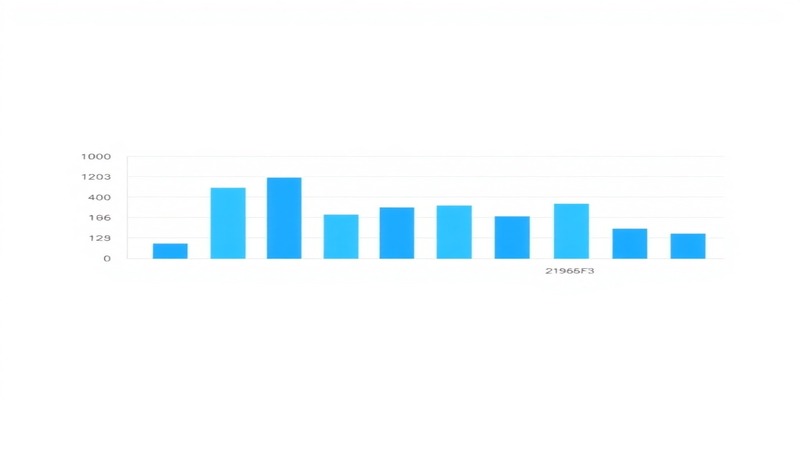
Benchmark scores comparison across Grok 3, DeepSeek V5, and MiniMax M3 on key evaluation metrics.
DeepSeek V5 Performance: The Open-Source Efficiency Leader
DeepSeek V5, launched in April 2026, represents a different philosophy. Rather than scaling to the largest possible model, DeepSeek focused on architectural innovations that maximize performance per parameter and per dollar. With approximately 250 billion parameters, it is smaller than Grok 3 but uses a Mixture-of-Experts (MoE) architecture that activates only 37 billion parameters per forward pass.
This efficiency-first approach yields remarkable results. DeepSeek V5 achieves 88.5% on MMLU-Pro — less than two points behind Grok 3 despite being 20% smaller in total parameter count. More impressively, its SWE-bench score of 52.1% makes it the current leader among publicly available models for software engineering tasks. The model also excels at long-context retrieval, scoring 96.3% on the RULER benchmark at 128K context length.
Cost-Performance Ratio
DeepSeek V5's biggest advantage may be economic. At $0.48 per million input tokens and $1.92 per million output tokens via API, it costs roughly one-third of Grok 3's pricing ($1.50/$6.00 per million tokens). This dramatic cost difference makes DeepSeek V5 the pragmatic choice for high-volume production workloads where performance within 1-2% of Grok 3 is acceptable.
Inference Speed as a Differentiator
MiniMax M3 achieves its speed advantage through a novel multi-query attention mechanism that reduces KV cache memory pressure during generation. Independent benchmarks from llmperf tests show M3 delivering 178 tokens per second on a single H100 GPU at batch size 1, compared to Grok 3's 62 tokens per second and DeepSeek V5's 89 tokens per second. For real-time applications like live translation, voice assistants, or interactive coding, this speed advantage can transform the user experience.
MiniMax M3 Scores: Lightweight Surprise
MiniMax M3 launched in May 2026 and surprised the AI community by punching well above its weight class. With only 156 billion parameters and a dense architecture (no MoE), M3 achieves 85.1% on MMLU-Pro and 79.8% on HumanEval. Its standout metric is inference speed — M3 processes tokens almost 3x faster than Grok 3 on equivalent hardware thanks to optimized attention mechanisms.
- MMLU-Pro: 85.1% — competitive despite 50% fewer parameters
- GSM-8K: 89.2% — strong math performance for its size
- HumanEval: 79.8% — capable but not top-tier coding
- Tokens/second: 178 (vs Grok 3's 62) — 3x inference speed advantage
Side-by-Side AI Model Benchmarks 2026 Comparison
To make the comparison picture clear, here is a head-to-head comparison of all three models across the most relevant evaluation dimensions. Scores are drawn from published third-party evaluations available as of June 2026.
| Benchmark | Grok 3 | DeepSeek V5 | MiniMax M3 |
|---|---|---|---|
| MMLU-Pro | 89.7% (1st) | 88.5% | 85.1% |
| GSM-8K (Math) | 94.1% (1st) | 91.8% | 89.2% |
| HumanEval (Code) | 87.3% | 88.1% | 79.8% |
| SWE-bench (Real Code) | 48.2% | 52.1% (1st) | 41.5% |
| RULER 128K Context | 91.4% | 96.3% (1st) | 88.7% |
| API Cost per 1M tokens | $1.50 / $6.00 | $0.48 / $1.92 (1st) | $0.60 / $2.40 |
The benchmark data reveals a fragmented landscape. No single model leads all categories. Grok 3 dominates raw reasoning and math, DeepSeek V5 leads on practical coding and cost-efficiency, and MiniMax M3 offers the best inference speed for latency-sensitive applications.
Performance tiers of the three frontier models showing their relative strengths across different evaluation categories.
What These Benchmarks Mean for Developers
This year's benchmark results point to a key insight: model selection now depends heavily on use case rather than raw capability rankings. Developers building math tutoring applications should gravitate toward Grok 3. Teams deploying AI-powered code review tools will find DeepSeek V5's SWE-bench leadership compelling. And anyone building real-time chat applications with strict latency requirements should evaluate MiniMax M3's speed advantage.
A practical example illustrates the trade-offs. Consider a customer support chatbot handling 10,000 queries per day. Using MiniMax M3, the 3x faster inference speed translates to roughly $200 per month in compute savings compared to Grok 3, while maintaining competitive response quality. On the other hand, a legal document analysis pipeline processing complex contracts would benefit more from Grok 3's superior reasoning — the higher inference cost is justified by lower error rates on nuanced clauses.
Independent benchmark evaluations from Stanford's HELM project confirm another important trend: the gap between open-weights models and proprietary leaders continues to narrow. DeepSeek V5's performance, achieved at one-third the inference cost of Grok 3, suggests that architectural innovation may matter more than raw scale going forward. Benchmark scores alone no longer tell the complete story — inference cost, latency, and ecosystem integration are becoming equally important factors in model selection.
Another critical dimension is benchmark longevity. A model that tops math reasoning today may not hold that lead next quarter as labs release specialized fine-tunes. Recent evaluation data reveals that the variance between monthly evaluations is increasing, suggesting that labs are experimenting more aggressively with training methodologies. This makes it essential to track trends over time rather than fixating on a single snapshot.
The Frontier Benchmark Landscape Is Shifting
Traditional benchmarks like MMLU and GSM-8K are approaching saturation — the top three models now score within 5 percentage points of each other. Newer evaluations like SWE-bench, RULER (long-context retrieval), and the emerging MLCommons AI Safety benchmark are becoming more differentiated. The models that lead the model evaluation landscape six months from now may not be the same ones winning today, as labs shift focus to specialized capabilities.
FAQ: AI Model Benchmarks 2026
Which AI model has the best benchmark scores in 2026?
No single model leads all benchmarks. Grok 3 tops MMLU-Pro (89.7%) and GSM-8K (94.1%). DeepSeek V5 leads SWE-bench (52.1%) and RULER long-context (96.3%). MiniMax M3 has the fastest inference speed at 178 tokens per second. The best choice depends on your specific use case priorities.
How reliable are vendor-published benchmark results?
Independent third-party evaluations from HELM, LMSYS, and MLCommons are more trustworthy than vendor claims. Some labs optimize specifically for popular benchmarks, a practice known as "benchmark gaming." Always cross-reference results with at least two independent sources before making a model decision.
What does SWE-bench actually measure?
SWE-bench evaluates a model's ability to resolve real GitHub issues — it presents the model with a code repository, a bug report, and asks it to generate a pull request that passes the repository's tests. Unlike HumanEval, which tests isolated function generation, SWE-bench measures end-to-end software engineering capability.
Which model is best for production deployment cost?
DeepSeek V5 offers the lowest API cost at $0.48 per million input tokens — roughly one-third of Grok 3's pricing. MiniMax M3 is the runner-up at $0.60 per million tokens. If you run models locally using open weights, DeepSeek V5's smaller activated parameter count (37B via MoE) also reduces GPU memory requirements.
Conclusion: Choose by Use Case, Not Rankings
The 2026 AI model benchmark wars have produced three genuinely competitive frontrunners, each with distinct strengths. Grok 3 leads on pure reasoning and mathematical ability. DeepSeek V5 offers the best coding performance per dollar through its efficient MoE architecture. And MiniMax M3 delivers remarkable speed for latency-critical applications. This competitive landscape shows that the era of a single dominant model is over — the smartest choice now depends on matching each model's strengths to your specific requirements.
Review your team's primary AI workload, compare the benchmark dimensions that matter most to your use case, and run your own evaluation before committing to any single model. With the field evolving this rapidly, the winning strategy is to design your application architecture to support model swapping — so when the next benchmark leader emerges, you can adopt it without rewriting your entire stack.
Which benchmark metric matters most for your work? Drop your experience in the comments — we want to know whether raw reasoning scores or practical coding benchmarks drive your model selection in 2026.
More to Read
Stay Ahead of AI
Weekly insights, tutorials, and tool reviews. No spam, ever.