Noam Shazeer Leaves Google: What It Means for AI

Noam Shazeer Leaves Google: What It Means for AI
Published: 2026-06-18 | AI Research • Google • OpenAI • Noam Shazeer
In a move that has sent shockwaves through the artificial intelligence community, Noam Shazeer — one of the most influential researchers in modern AI history and a co-inventor of the Transformer architecture — has left Google to join OpenAI in June 2026. The departure marks the end of a significant chapter in Google's AI research division and signals a dramatic reshuffling of talent in the foundation model landscape.
Shazeer is not just any researcher. As the lead author of the seminal 2017 paper "Attention Is All You Need" alongside seven other Google researchers, his work created the architectural foundation upon which virtually every modern large language model — including ChatGPT, GPT-4, Gemini, and Claude — is built. The paper has accumulated over 100,000 citations, making it one of the most cited academic works in the history of computer science. His decision to move to OpenAI carries implications far beyond one person's career change.
Here is what Noam Shazeer leaving Google means for the future of AI research, OpenAI's architecture ambitions, and Google's deepening talent retention crisis.
Why Noam Shazeer Leaves Google Now
Shazeer's departure from Google comes after a long and distinguished career spanning over two decades. He originally joined Google in 2000 and was instrumental in building some of the company's most critical AI infrastructure, including the early neural network systems that would eventually evolve into Google's modern AI stack. After a brief stint away to co-found the AI startup Character.AI in 2021 — which reached a $1 billion valuation by mid-2023 — he returned to Google in 2024 as part of an effort to reconsolidate top AI talent within the company.
The timing of this second departure is especially notable. Google has been pouring resources into its Gemini model line, positioning it as a direct competitor to OpenAI's GPT series and Claude. Losing a researcher of Shazeer's calibre at this juncture raises serious questions about Google's ability to retain its top-tier AI architects in an increasingly competitive talent market.
Internal and External Factors Behind the Move
Several converging factors made this move happen at this specific moment:
- Architecture vision divergence — Internal sources suggest Shazeer's vision for next-generation transformer architectures diverged from Google's current roadmap, which focuses on incremental efficiency improvements rather than fundamentally rethinking the attention mechanism. His interest in exploring alternatives to the scaled dot-product attention pattern — including linear attention mechanisms and hierarchical processing — found more receptivity at OpenAI's architecture research group.
- OpenAI's aggressive architecture hiring push — OpenAI has been building a dedicated architecture research team since late 2025, hiring at least 15 senior researchers in early 2026 alone. Shazeer represents a crown jewel acquisition, with reported compensation including substantial salary and equity in OpenAI's continuing funding rounds.
- Organizational constraints at Google scale — Google's size and regulatory scrutiny create slower decision cycles than OpenAI's more agile research environment. This has driven several high-profile AI researchers to leave, including Geoffrey Hinton in 2023.
This departure follows a troubling pattern for Google: Geoffrey Hinton left in 2023 to speak freely about AI risks. Multiple members of the original Transformer paper author list have moved to other organizations. And Shazeer's exit now — he was the architect of the architecture that made the entire field what it is today — feels qualitatively different because of the deep, irreplaceable knowledge he takes with him.
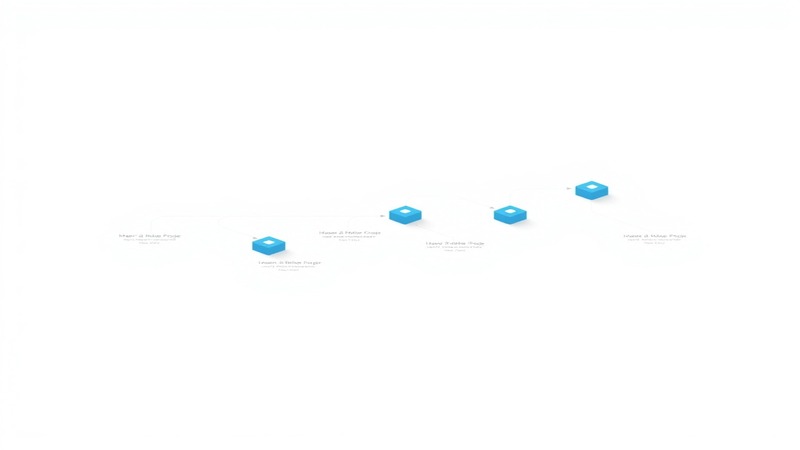
Transformer architecture evolution timeline from the 2017 paper to current-generation large language models. Each milestone node represents a significant breakthrough built on the original attention mechanism.
How Noam Shazeer Leaves Google Impacts OpenAI Research
OpenAI gains more than just a marquee name with Shazeer. It gains someone who understands the transformer architecture at a deeper level than perhaps anyone else alive. Having co-invented the technology that powers GPT-4o, GPT-5, and the rumored GPT-5.5, Shazeer brings an intimate understanding of both the theoretical foundations and the practical engineering challenges of scaling transformers.
Advancing Beyond the Current Transformer Paradigm
While OpenAI has achieved remarkable success with GPT models built on the transformer architecture, the company has been actively exploring architectural alternatives. Several research directions are currently being pursued:
- State space models (SSMs) — OpenAI researchers have been investigating whether alternatives to attention-based sequence modeling can match transformer quality at lower computational cost, particularly for long-context applications.
- Mixture-of-experts optimization — Shazeer pioneered MoE architectures with his 2017 paper on sparsely-gated layers. His expertise in routing and load balancing directly applies to making models like GPT-5 more efficient.
- Next-generation attention mechanisms — Research into linear attention and sliding window attention could lead to models that handle dramatically longer contexts without proportional compute increases.
Shazeer's role as architecture research lead bridges advances with practical implementation. His track record at Google and Character.AI suggests concrete innovations from OpenAI within 12-18 months.
What This Means for Google's Gemini Roadmap
For Google, the loss compounds an already difficult talent retention situation. The company has seen multiple rounds of departures since 2023, each eroding institutional knowledge — the accumulated understanding of how to build and scale massive AI systems. Google's Gemini team will now need to advance its architecture without one of its most experienced contributors, potentially slowing iteration cycles on next-generation models.
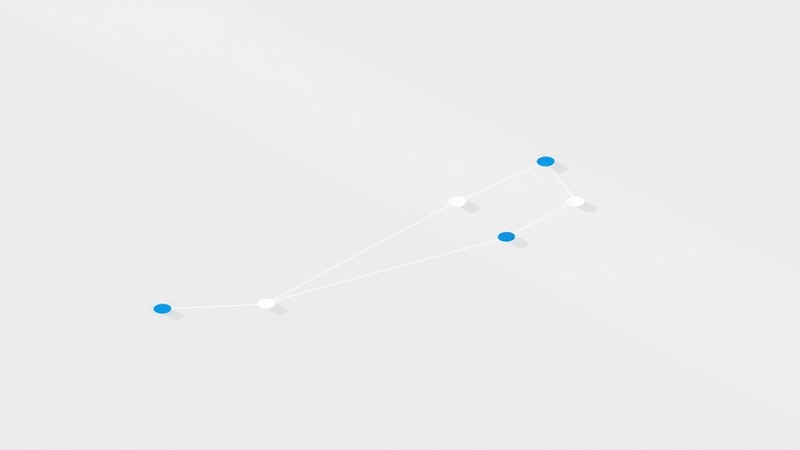
AI talent movement pathways between major research labs in 2026. The flow of senior architecture researchers toward OpenAI has accelerated significantly over the past 18 months.
What Noam Shazeer Leaves Google Signals for AI Talent
The broader AI talent market is experiencing what industry observers are calling a "gold rush" for senior architecture researchers. The demand for people who deeply understand how to design, train, and scale large neural networks has never been higher, and compensation packages reflect this scarcity — senior architecture researchers at top labs now command total compensation packages exceeding $2-5 million annually.
Current State of AI Talent Competition
| Company | Architecture Researchers Hired (2025-2026) | Key Departures |
|---|---|---|
| OpenAI | 40+ architecture specialists | Several safety researchers (2024) |
| Google DeepMind | 30+ (mostly internal transfers) | Hinton (2023), Shazeer (2026), multiple startup founders |
| Anthropic | 25+ (safety and alignment focus) | Limited senior departures |
| xAI | 15+ (aggressive poaching from top labs) | Early stage, minimal departures |
| Meta AI | 20+ (open-source focused) | Several researchers to AI startups |
Shazeer's move could trigger a cascade effect — when a researcher of this stature changes companies, it signals which direction the field is moving. Junior researchers may gravitate toward OpenAI, and other labs must strengthen their value propositions to retain their own talent.
Financial and Strategic Implications
OpenAI's reported spending of $34 billion in 2025 with an estimated $39 billion operating loss has raised questions about long-term financial sustainability. However, hiring Shazeer signals a bet that architectural innovation — not just scaling — will define the next phase of AI progress.
The Bigger Picture: Google's AI Talent Retention Crisis
Google's AI talent retention problem is not new, but Shazeer's departure crystallizes it in stark terms. Between 2023 and 2026, the company has lost an extraordinary concentration of AI research talent:
- Geoffrey Hinton (May 2023) — The "godfather of AI" left Google to speak freely about the existential risks of AI systems, criticizing the pace of commercial deployment.
- Multiple Transformer authors — Of the eight authors of "Attention Is All You Need," six have now left Google for other opportunities, including founding companies (Adept AI, Cohere, Character.AI) or joining competitors directly.
- DeepMind talent drain — Following the merger of Google Brain and DeepMind in 2023, several senior DeepMind researchers departed for startups and academic positions, citing cultural integration challenges.
- Mid-career researcher exodus — Numerous mid-level researchers have left for AI startups, attracted by equity upside and research autonomy that larger organizations struggle to match.
The root causes are structural. Google's size creates decision-making inertia, its regulatory scrutiny limits experimental freedom, and compensation at well-funded competitors has become increasingly difficult for even Google to match on a risk-adjusted basis.
What Comes Next for Transformer Architecture
The question that hangs over Shazeer's move is deceptively simple: will he build something that changes the architecture of AI? The transformer has dominated for nearly a decade, but the field is actively searching for its successor. Several promising directions are being explored across the industry, and Shazeer's expertise positions him to make significant contributions to whichever path OpenAI pursues most aggressively.
Whether the next breakthrough comes from the attention mechanism or a different paradigm, the concentration of architectural talent at OpenAI increases the probability that the company reaches the next frontier first. For Google, the challenge is not just replacing Shazeer but rebuilding the conditions that attract and retain researchers of his calibre.
FAQ: The Impact of Shazeer's Move
Who is Noam Shazeer and why does his departure matter?
Noam Shazeer is a co-inventor of the Transformer architecture, the technology behind GPT, Gemini, and Claude. He joined Google in 2000, co-founded Character.AI in 2021, returned to Google in 2024, and is now leaving for OpenAI in 2026. His departure represents irreplaceable architectural knowledge leaving Google.
What will Shazeer work on at OpenAI?
OpenAI has brought Shazeer on as a lead for architecture research, focusing on alternatives to current transformer designs, improving mixture-of-experts efficiency, and developing next-generation attention mechanisms for better efficiency and capability.
How does this affect Google's competitive position?
Google's AI division has suffered multiple high-profile departures over the past three years, each compounding the previous ones by eroding institutional knowledge. While Google still employs thousands of AI researchers, the departure of Shazeer is both a symbolic and practical blow that will require significant organizational changes to offset.
Could this lead to a new AI architecture?
Shazeer's move increases the probability that OpenAI will push beyond the current transformer paradigm. Several alternative architectures are being explored across the industry — including state space models, liquid neural networks, and novel attention variants — and Shazeer's expertise positions him to drive meaningful innovation at OpenAI.
Conclusion: A Defining Moment for AI's Future
Shazeer leaves Google at a pivotal moment in AI history. The transformer architecture he helped invent has powered a decade of unprecedented progress, but the field is now searching for what comes next. His move to OpenAI places him at the center of that search, working for the company that has most aggressively pushed transformer-based models to their limits.
For Google, this departure is a wake-up call about creating environments where architectural visionaries can do their best work. For OpenAI, it is a strategic win that could define the next phase of AI development. For the broader industry, it highlights a growing tension: the talent building AI is increasingly concentrated in fewer hands, even as the technology becomes more powerful.
One thing is certain: the next chapter of AI architecture research just became significantly more interesting.
Stay ahead of AI developments: What do you think Noam Shazeer will build at OpenAI? Share your thoughts in the comments below.
More to Read
Stay Ahead of AI
Weekly insights, tutorials, and tool reviews. No spam, ever.