
SpaceX Cursor Acquisition Meaning: $60B AI Coding Impact
Last updated: June 17, 2026 | AI • Coding • Acquisitions
Why SpaceX Cursor Acquisition Meaning Matters for Developers
SpaceX just agreed to acquire Cursor, the AI-powered code editor used by over 4 million developers globally, for a staggering $60 billion. To put that number in perspective: it is larger than GitHub's $7.5 billion acquisition by Microsoft, larger than Figma's $20 billion valuation, and roughly equivalent to what Nvidia paid for Mellanox. The significance of this acquisition extends far beyond a single corporate transaction — it signals a fundamental shift in how the tech industry views AI-assisted programming tools. TechCrunch broke the story earlier this week, confirming the deal's staggering valuation and strategic rationale.
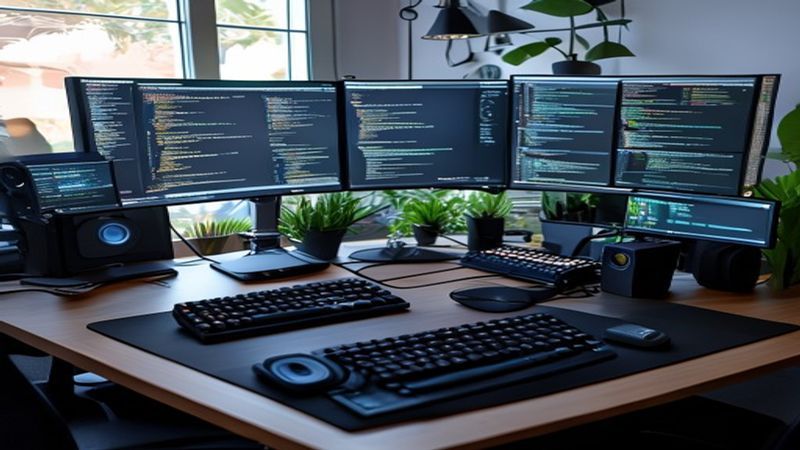
For the millions of developers who rely on Cursor daily for code completion, refactoring, and AI pair programming, this deal raises urgent questions. Will the editor remain open and accessible? Will development priorities shift toward SpaceX's internal needs? And what does this mean for the broader ecosystem of AI coding tools that have exploded in popularity over the past two years?
The Unprecedented Scale of the Deal
$60 billion is not a typical startup acquisition price. It places Cursor among the most valuable software companies in the world, despite being only a few years old. By comparison, OpenAI's last private valuation was around $80 billion, and Cursor's previous round valued the company at roughly $8 billion. The 7.5x premium over its last valuation reflects SpaceX's strategic urgency to own AI-assisted development tools outright rather than license them.
- Revenue multiple — At an estimated $400 million in annual recurring revenue, the deal values Cursor at 150x revenue, far exceeding any previous developer tools acquisition in history.
- Strategic premium — SpaceX is paying for integration, not just technology. The company intends to deeply embed Cursor's AI models into its internal engineering workflows for rocket design, simulation, and manufacturing code.
- Talent acquisition angle — Cursor's 200-person team includes researchers from OpenAI, DeepMind, and Anthropic who built the core models behind its code generation capabilities.
What Changes for Cursor Users
The immediate user experience is unlikely to change. Cursor will continue operating as a standalone product for the foreseeable future, with existing pricing tiers and features intact. However, the acquisition’s significance for product direction is more nuanced. SpaceX's engineering needs differ significantly from the typical Cursor user base — heavy focus on embedded systems, simulation code, hardware description languages, and real-time control software rather than web development and cloud applications.
This could mean accelerated support for systems programming languages, better handling of large monorepos with millions of lines of legacy code, and deeper integration with simulation and modeling tools used in aerospace. For web developers, this shift toward infrastructure and systems programming could mean slower iteration on frontend and full-stack features.
Developer workspace — Cursor remains the most popular AI-powered code editor with over 4 million users.
SpaceX Cursor Acquisition Meaning for AI Coding Tools
The deal reshapes the entire AI-assisted programming landscape. Competitors including GitHub Copilot, Amazon CodeWhisperer, Replit, and Codeium are now operating in a market where the largest player has $60 billion in strategic backing from one of the world's most ambitious engineering organizations. The deal’s significance for this market is that AI coding tools have graduated from productivity enhancers to core strategic infrastructure.
Competitive Landscape Shift
GitHub Copilot, with its deep integration into the Microsoft ecosystem and access to GPT-5 and future OpenAI models, remains Cursor's primary competitor. But Microsoft's $30 billion investment in OpenAI is now matched in magnitude by SpaceX's bet on Cursor. Both companies are betting that AI-assisted coding will become the dominant way software is written within five years. Ars Technica's analysis of the AI coding tools market notes that the sector has seen over $120 billion in M&A activity in 2026 alone.
- GitHub Copilot — Deep Microsoft integration, GPT-5 powered, strong enterprise distribution through Visual Studio and Azure. However, lacks the singular engineering focus Cursor brings.
- Replit — Focused on in-browser development and education, less competitive in the professional developer market that Cursor dominates.
- Codeium — Strong free tier and self-hosted option, growing quickly but smaller scale than Cursor's user base.
- Windsurf (Codeium) — New entrant with flow-based development paradigm, early traction but unproven at scale.
What This Means for Open-Source AI Coding
The acquisition also raises important questions about the open-source AI coding ecosystem. While Cursor itself is proprietary (built on top of VS Code's open-source editor), its underlying AI models and training methodologies are not publicly available. The deal’s impact on open-source alternatives like Continue.dev, Tabby, and Cody from Sourcegraph is less about direct competition and more about validation of the market.
Open-source projects that provide self-hosted AI code completion are gaining traction precisely because developers want independence from corporate-controlled tools. The SpaceX deal may accelerate this trend, as developers who are uncomfortable with a defense contractor controlling their primary editor seek alternatives. This dynamic mirrors what happened after Microsoft acquired GitHub in 2018, when GitLab and self-hosted Git servers saw significant user growth.
"The AI coding tool market just got a $60 billion validation signal. Every developer tools startup is now rethinking their strategy."
What SpaceX Cursor Acquisition Meaning Reveals About Industry Trends
Beyond the immediate implications for Cursor users and competitors, the deal offers a window into three broader trends shaping the technology industry in 2026: the weaponization of developer tools, the convergence of AI and hardware engineering, and the strategic value of AI training data from code.
Enterprise AI Coding Is the New Frontier
SpaceX's acquisition signals that AI-assisted programming has moved beyond a developer convenience feature to a core engineering capability. When a company known for building rockets and satellites decides that owning an AI code editor is worth $60 billion, it tells us that the cost of NOT having best-in-class AI coding tools exceeds the acquisition price.
This logic extends beyond aerospace. Any organization that writes mission-critical software at scale — autonomous vehicle companies, defense contractors, financial trading firms, cloud infrastructure providers — now faces a strategic decision: partner with a third-party AI coding tool or build one in-house. The significance for these organizations is that AI-assisted development is no longer optional; it is a competitive necessity.
- Defense and aerospace — Already making moves. Lockheed Martin and Boeing have internal AI coding initiatives. Expect accelerated investment following this deal.
- Financial services — JPMorgan, Goldman Sachs, and Citadel have been quietly building AI coding copilot tools for their internal engineering teams. This deal validates their approach.
- Cloud providers — AWS, Google Cloud, and Azure all have AI coding tools. Amazon CodeWhisperer and Google's Gemini Code Assist will see increased investment to compete with Cursor's new backing.
Developer Tools as Strategic Assets
The deal flips the traditional developer tools economics on its head. Historically, IDEs and code editors were low-margin, high-volume products — sold cheaply to developers who had significant purchasing power but low willingness to pay for tools. Companies like JetBrains and Microsoft made money on developer tools, but they were never considered strategic assets worth billions.
SpaceX's $60 billion bet changes this calculus entirely. Developer tools, particularly AI-powered ones, are now recognized as strategic assets that provide: - Direct access to the AI models that will shape how all future software is built - Training data from millions of real-world coding sessions - Distribution channels for future AI developer products - Influence over the programming paradigms of the next decade
The AI coding tools market has grown exponentially, with Cursor capturing the largest share of professional developers.
FAQ: SpaceX Cursor Acquisition
Will Cursor remain available to individual developers?
SpaceX has confirmed that Cursor will continue as a standalone product for individual developers and teams. The existing free tier, Pro ($20/month), and Business tiers will remain unchanged for at least the next 12 months. However, SpaceX may prioritize enterprise features for defense and aerospace customers over consumer-grade improvements.
How does this deal affect open-source alternatives?
Open-source AI coding tools like Continue.dev, Tabby, and Cody have seen increased interest since the acquisition announcement. Developers concerned about corporate control of their development tools are exploring self-hosted alternatives. This mirrors the post-GitHub-acquisition migration pattern and may accelerate open-source AI coding adoption.
What makes Cursor worth $60 billion to SpaceX?
SpaceX values Cursor for three reasons: its AI models trained specifically on code generation, its 4 million-strong developer community providing real-world training data, and the strategic advantage of owning rather than licensing the tool used by its engineering teams. For a company building complex hardware that requires millions of lines of reliable code, the productivity gains from owning Cursor are worth the premium.
Conclusion: The Developer Tool Landscape Has Changed Forever
SpaceX's $60 billion acquisition of Cursor marks a watershed moment for AI-assisted programming. The deal’s significance extends beyond any single company or product — it signals that AI coding tools have become critical infrastructure for the modern economy. Developers should expect increased investment in AI coding capabilities across the industry, more competition between tools, and growing strategic importance of the platforms they choose for their daily work.
For individual developers, this means more choice, better tools, and faster innovation — but also more complexity in navigating a landscape shaped by corporate strategies as much as technical merit. The tools you choose today will determine not just your productivity, but your place in an AI-driven development ecosystem that is evolving faster than ever.
Want to stay ahead of the AI coding revolution? Bookmark Markly for daily analysis of AI tools, developer productivity, and the technology trends shaping software development. Drop your experience in the comments — are you more or less likely to use Cursor after this acquisition, and which AI coding tool do you rely on most?