
Meta 40B Data Center – Hyperscaler AI Race Explained
When Meta announced it was spending an additional $40 billion on a single data center campus in Louisiana, the AI industry collectively stopped to do the math. That's more than most countries spend on their entire technology infrastructure in a decade. This meta 40b data center investment represents the single largest capital expenditure by any hyperscaler on one facility — and it signals a fundamental shift in how the AI race is being fought. The scale of the meta 40b data center is unprecedented in the history of technology infrastructure.
For context, Meta's original plan for this campus was around $800 million. The company has now multiplied that by 50x. What changed? The answer is simple and seismic: AI model training at scale demands compute density that didn't exist even twelve months ago.
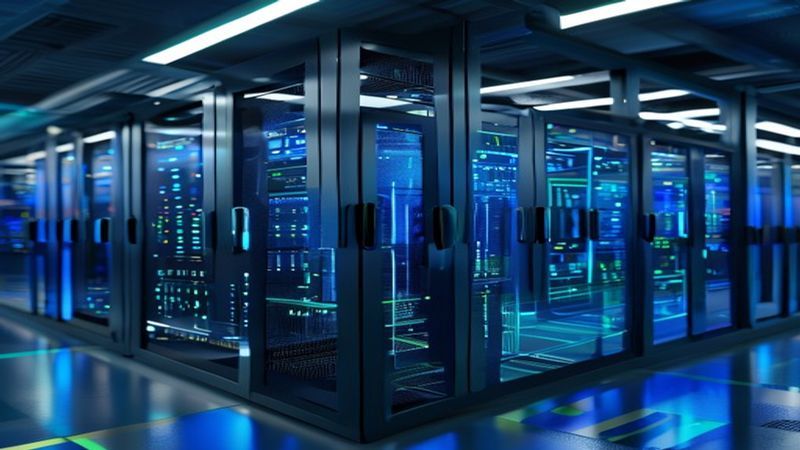
The $40B Question: What the Meta 40B Data Center Is Actually Building
The facility, located in northeastern Louisiana near the city of Monroe, is not just another server farm. It's a hyperscale AI training campus designed to deliver over 5 gigawatts (GW) of compute capacity — enough to power roughly 3.5 million homes. Understanding what this meta 40b data center actually contains helps explain why the price tag is so astronomical.
Here's what the money buys:
5GW+ Electrical Capacity
The campus will draw power from dedicated natural gas plants and a massive on-site solar farm. Five gigawatts is more than the peak power draw of the entire country of Ireland. This is compute infrastructure built at a scale that rivals small nations.
Custom Liquid Cooling Infrastructure
Meta is deploying direct-to-chip and immersion liquid cooling across the entire campus. Training frontier models like Llama 4 and beyond generates enormous thermal loads that traditional air cooling cannot handle. Every rack in this facility is liquid-cooled from day one.
NVIDIA H100/B200 Clusters at Unprecedented Density
Industry analysts estimate the campus will house between 500,000 and 1 million next-generation AI accelerators when fully built out. Meta has been one of NVIDIA's largest customers for H100 GPUs, and this facility suggests their appetite is nowhere near satiated.
On-Site Renewable Energy Generation
Beyond grid power, Meta is constructing what it calls a "utility-scale" solar farm spanning thousands of acres alongside the campus. The combination of natural gas peaker plants and solar gives the facility 24/7 operational resilience while meeting Meta's carbon neutrality commitments.
Why Louisiana? The Geography of AI Compute
The choice of Louisiana may seem surprising for a Silicon Valley giant, but it makes strategic sense on multiple levels. The location of the meta 40b data center was chosen with care, balancing energy access, climate, land cost, and connectivity in a way that few other regions could match.
Land Availability and Cost
The site covers over 4,000 acres — land that would cost billions in California or Northern Virginia (currently the world's largest data center market). Louisiana offered significant tax incentives and land at a fraction of the cost of traditional tech hubs.
Energy Access and Grid Capacity
Louisiana sits on the southern end of the MISO (Midcontinent Independent System Operator) grid, which has substantial excess generation capacity thanks to historical industrial demand from oil and gas. Meta can draw reliable power without waiting years for grid upgrades that would be required in already-strained markets like Northern Virginia or Dallas.
Fiber Connectivity
Despite its rural location, Monroe sits near major fiber backbone routes connecting the southeastern US to Dallas, Atlanta, and the East Coast. Meta has invested in dedicated dark fiber to ensure the campus has the bandwidth needed for massive model training data flows.
Climate Considerations
Northeastern Louisiana experiences relatively mild average temperatures compared to the deep south, reducing cooling overhead. While not as cool as Nordic locations, the climate is manageable with modern liquid cooling — and the land cost savings dwarf the marginal cooling expense.
5GW Compute: A Number That Changes the Game
Five gigawatts of compute capacity is not just big — it's civilization-scale infrastructure. To understand the scale of the meta 40b data center, consider the following comparisons:
- The entire AWS global infrastructure (all regions combined) was estimated at roughly 8-10 GW in 2025. Meta is building one facility with half that capacity.
- Google's total global data center footprint was estimated at approximately 6 GW in 2025. One Meta campus will approach that.
- A single training run for a frontier model like GPT-5 or Llama 4 at full scale would consume roughly 50-80 MW continuously for months. The 5GW campus could run 60+ such training runs simultaneously.
- The facility's power budget exceeds that of 20 standard hyperscale data centers combined.
This scale has profound implications for AI training economics. When you can pack this much compute under one roof, you eliminate the data transfer bottlenecks that plague distributed training across multiple facilities. The entire model fits on one campus — latency between training nodes drops to microseconds instead of milliseconds.
Michael Patrick, Meta's VP of Infrastructure, described the thinking behind the scale in a recent investor briefing: "We realized that training future generations of AI models requires a fundamentally different approach to data center architecture. You cannot just scale up existing designs. You need to build for 10x the density from the ground up."
Meta 40B Data Center vs Google, Microsoft, Amazon: The Infra Arms Race
The hyperscaler data center race has become the defining capital allocation strategy of the AI era. Here's how the four major players compare:
| Company | Major AI Infra Investment | Scale | Primary AI Focus |
|---|---|---|---|
| Meta | Louisiana $40B campus | 5GW+ single site | Llama model training, AI inference at scale |
| Global data center expansion + TPU v5 | ~6-7 GW global | Gemini training, search AI, cloud TPU | |
| Microsoft | $100B+ Stargate AI supercomputer | Multi-GW phased buildout | OpenAI models, Copilot, Azure AI |
| Amazon (AWS) | $150B+ multi-year infra plan | ~8-10 GW global | Bedrock, Amazon Q, Trainium chips |
Each company is pursuing a different strategy. Microsoft has bet big on its partnership with OpenAI through the Stargate project. Google is leveraging its custom TPU architecture. Amazon is doubling down on custom Trainium and Inferentia silicon. For context, NVIDIA's latest earnings reports highlight that hyperscaler data center revenue now accounts for over 50% of their data center segment.
Meta's approach is distinctive: maximum density in a single location. The Louisiana campus is purpose-built for training their largest open-source models. Unlike Microsoft's Stargate (which is spread across multiple phases and locations), Meta is concentrating firepower in one place — and the economics of that bet are breathtaking.
What This Means for GPU Supply and AI Model Training
Meta's massive buildout has ripple effects across the entire AI supply chain — particularly for GPU availability and model development strategy. The resource requirements of the meta 40b data center alone will reshape supply-demand dynamics for years. As Bloomberg reported on the initial announcement, the scale of this investment caught even seasoned industry analysts by surprise.
NVIDIA's Allocation Challenge
With demand for H100, H200, and B200 GPUs already outstripping supply, the meta 40b data center's single-facility orders create a concentrated demand signal that NVIDIA must prioritize. Analysts estimate the Louisiana campus alone could absorb 10-15% of NVIDIA's total production capacity for multiple quarters. This has implications for every other company trying to acquire GPUs — from AI startups to enterprise IT departments.
Impact on Open-Source AI
Meta has been the leading proponent of open-source AI models through its Llama series. The Louisiana campus is purpose-built to train even larger open-source models. This investment signals that Meta believes open-source AI will not just compete with proprietary models but ultimately win on ecosystem effects — and they are building the compute infrastructure to prove it.
As Yann LeCun, Meta's Chief AI Scientist, has repeatedly argued, open platforms create faster innovation cycles than closed systems. The $40B facility is Meta's bet that this thesis holds at the frontier of model capability.
Timeline and Phases
The campus will be built in multiple phases over 4-6 years. Phase 1 (expected operational by Q2 2027) will deliver approximately 1.2 GW of compute. Full buildout is targeted for 2030-2031. This timeline aligns with Meta's projections for Llama 5 and beyond — models that may require 10x the compute of current frontier systems.
FAQ: Meta 40B Data Center Expansion
Why is Meta spending billions on the meta 40b data center?
Meta is investing in the meta 40b data center to support its AI ambitions, particularly training and running large language models like Llama. The company believes AI is the most important technology shift of the decade and is allocating capital accordingly — the meta 40b data center is the centerpiece of this strategy.
How much does a hyperscale meta 40b data center cost?
Traditional hyperscale data centers cost $500 million to $1.5 billion. Meta's Louisiana campus at $40B+ is in a completely different category — it's a "mega-campus" designed from the ground up for next-generation AI workloads, not standard cloud computing. The meta 40b data center price tag reflects the unprecedented compute density and infrastructure requirements.
Which company has the largest AI data center?
Upon completion, Meta's Louisiana campus will be the single largest AI training facility in the world at 5GW+. Microsoft's Stargate project is larger in total investment but spread across multiple locations and phases. Google's data center network is the most geographically distributed.
What is 5GW compute capacity?
5GW (gigawatts) refers to the electrical power capacity of the facility — how much electricity the servers and cooling systems can draw simultaneously. It is a proxy for compute density. Five gigawatts is roughly equivalent to the power consumption of 3-4 million homes or the output of 2-3 nuclear power plants. The meta 40b data center will draw more power than the entire country of Ireland.
How does the meta 40b data center compare to Google and Microsoft facilities?
Meta is focusing on maximum single-site density (one massive campus). Google prioritizes efficiency and custom TPU silicon. Microsoft is taking a phased, multi-location approach through the Stargate project. Each strategy reflects the company's distinct AI model philosophy — open-source concentration (Meta), integrated hardware-software (Google), and strategic partnership scaling (Microsoft).
Conclusion: The Hyperscaler Era of AI
Meta's $40 billion Louisiana data center is more than just an infrastructure announcement — it is a declaration that the AI race has entered a new phase. The era of building a few thousand GPUs in a repurposed office building and calling it an AI lab is over. Frontier AI now requires infrastructure at the scale of entire power grids.
For AI practitioners and businesses, the implications are clear: the cost of entry for frontier model training is now measured in billions, not millions. The hyperscalers are building a compute moat that will be extraordinarily difficult for startups or open-source communities to match — even as the models themselves remain open.
My take: Meta's bet on concentration (one massive campus vs. distributed buildout) is high-risk but potentially high-reward. If single-location training delivers the performance gains they expect, the efficiency advantage over distributed competitors could be decisive. If not, they've bet $40 billion on a thesis that may not pan out. Either way, the hyperscaler infrastructure arms race is the single most important story in AI right now — and it is far from over.
What do you think — is Meta's single-campus strategy smarter than Microsoft's distributed Stargate approach, or is concentrating all your compute in one location too risky? Drop your thoughts in the comments below. And if you found this analysis valuable, explore our complete coverage of the AI infrastructure arms race to see how each hyperscaler is positioning for the next decade of AI.